I am a writer and reporter at Ever List, passionate about sharing meaningful stories from the UAE and around the world. I cover news, lifestyle, business, travel, and community topics. My goal is to provide readers with clear, useful, and reliable information in an easy-to-understand way. I enjoy discovering new stories, connecting with people, and highlighting topics that matter to the community.
UAE No-Homework Policy: Parents Debate What Children Really Need After School

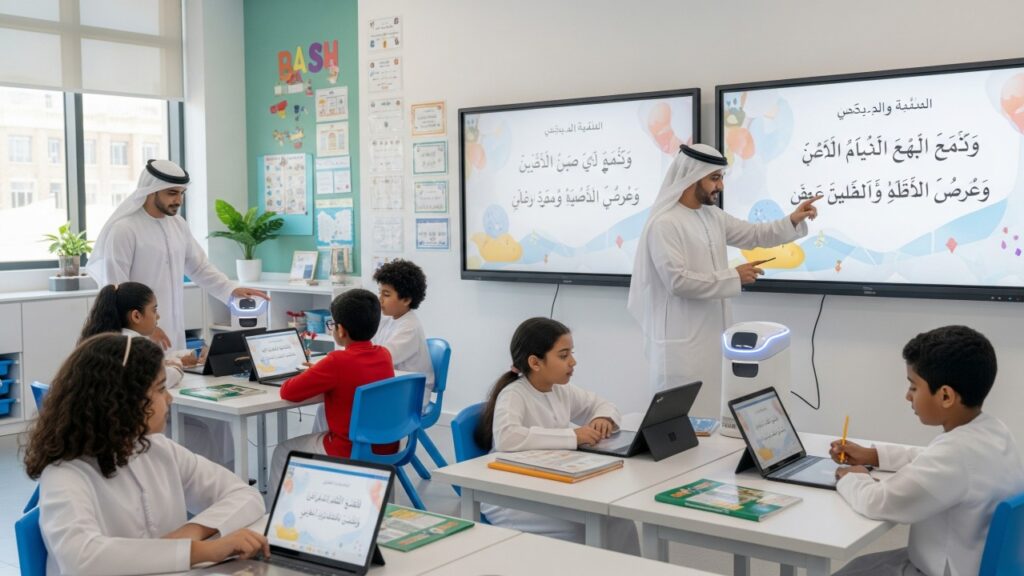
The UAE has just announced it is removing traditional homework for children from KG through Grade 2 in public schools. Instead, families will be encouraged to read together at home. It sounds simple. But for parents across the country, the news opened up a much bigger conversation. Is homework actually useful? What do children really need after six hours in a classroom? And does removing it help or hurt? Gulf News spoke to parents and they had a lot to say.
It Depends on the Age and Most Parents Agree on That
The first thing almost every parent said is that age changes everything. Katy Keenan, CEO of the British Chamber of Commerce Dubai, put it clearly. She said homework should be optional up to Year 7, and that for older students approaching exams, some level of homework makes sense to consolidate what they have learned. But she also pointed out that the best schools constantly check the volume of homework across all subjects, because each teacher does not always know what the others have already set. A child with six subjects can end up drowning in three hours of work every night before anyone realises it has gone too far. Dr Soumaya Askri, Assistant Professor at Canadian University Dubai, agrees that age matters. But for her, the deeper question is not whether homework is optional or compulsory. It is whether it has any real educational purpose to begin with. She said homework does not automatically lead to better learning just because it exists. That is the point most people miss. If you ever receive unknown calls from tutoring centres, educational companies, or curriculum providers claiming to offer solutions around the new homework policy, always check the number before engaging. Use the Who Called Me From This Number UAE tool to verify any unfamiliar caller before sharing your contact details.
Quality Matters More Than Quantity
Every parent Gulf News spoke to agreed on one thing. It is not how much homework a child does. It is what the homework actually asks them to do. Dr Askri said she would much rather her child spend 20 focused minutes on an assignment that requires real thinking than spend an hour filling in repetitive worksheets just to show that homework was completed. She said a shorter, carefully designed task can be far more intellectually valuable than several pages of exercises. The homework she values asks children to read, reflect, solve problems, and think independently. She is especially positive about reading for pleasure, inquiry-based tasks where children investigate a real question, and projects that genuinely belong to the child. Her one strong view on group or creative projects is that parents should not end up doing the work. If the finished product reflects the parent and not the child, the task has already failed its purpose. Back-to-school season brings a lot of expenses at once books, uniforms, stationery, activity fees. A quick FAB Balance Check Online helps you see exactly where your account stands before the spending starts, without needing to visit a branch.
What Actually Gets Squeezed Out of the Evening
The thing parents talk about most is not the homework itself. It is everything that homework pushes out of a child’s evening. Dr Askri said she wants her child to have time to decompress after school, talk to the family, and just enjoy being at home before being sent straight to the desk. A tired child doing homework late at night is not learning effectively, she said. And the unstructured time that homework replaces dinner table conversations, helping around the house, playing with siblings, reading together is also educational, just in a way that worksheets cannot measure. Aliah Fareed Lutfi Harmouzi, a single mother of three children aged 7, 10 and 11, has figured out her own system over the years. She does homework once a week, consistently, rather than a little bit every night. She said the repetition of weekly maths sheets means her children end up not needing to study as hard for exams because the knowledge has already been reinforced over time. She is honest that it can be exhausting especially after a long day of work but she has reframed it in her own mind as bonding time. She said that by the end of the session they are all laughing and joking, even on the days that start with crying.
The Pressure on Older Students Is Real and Different
Keenan said the conversation changes completely for students in their final years of school. They are managing six or more subjects, sitting coursework, preparing for exams, and already time-poor before any teacher adds extra work at home. She said the best schools track the total homework load across all subjects and adjust accordingly. When that tracking does not happen, students can end up spending four or five hours a night on schoolwork without any teacher being aware of the combined pressure. Dr Askri added that if she has to teach a concept from scratch at home for her child to complete an assignment, she questions whether that task is serving its real purpose. Homework should reinforce learning. It should not transfer the responsibility for teaching from the classroom to the kitchen table. That is not a parent’s job and it is not fair to the child either.
What Would Parents Want If Homework Disappeared Entirely?
Nobody Gulf News spoke to wants homework abolished completely. But they all have clear views on what they would want children to do with the extra time if it were reduced. Dr Askri said she would want her child to have time with family and friends, to pursue a hobby, and to have the freedom to choose what to do with an evening. Marjie Mirabel Gawaran, whose daughter is four and not yet in school, said she would want the extra time used for meaningful play, family conversations, outdoor activities, and proper rest. She said these experiences teach social, emotional, and practical skills that worksheets simply cannot. None of them used the word “idle” to describe what children would do without homework. They all described children who would be learning just differently. If you use Etisalat and want to make sure your phone stays connected for school notifications, parent portals, and teacher messages throughout the year, take a moment to check How to Check Balance in Etisalat so your credit never runs out at an important moment.
Nobody wants homework piled on for its own sake. And nobody wants it gone entirely either. The parents Gulf News spoke to all landed in the same place: less can be more, purpose beats volume, and an evening at home is part of childhood, not just recovery time before the next school day. For more UAE education news and helpful guides, visit Ever List.

Written by
Sara Rayan
Search