I am a writer and reporter at Ever List, passionate about sharing meaningful stories from the UAE and around the world. I cover news, lifestyle, business, travel, and community topics. My goal is to provide readers with clear, useful, and reliable information in an easy-to-understand way. I enjoy discovering new stories, connecting with people, and highlighting topics that matter to the community.
UAE Schools 2026-27: New Rules, Policies & Changes Parents Need to Know
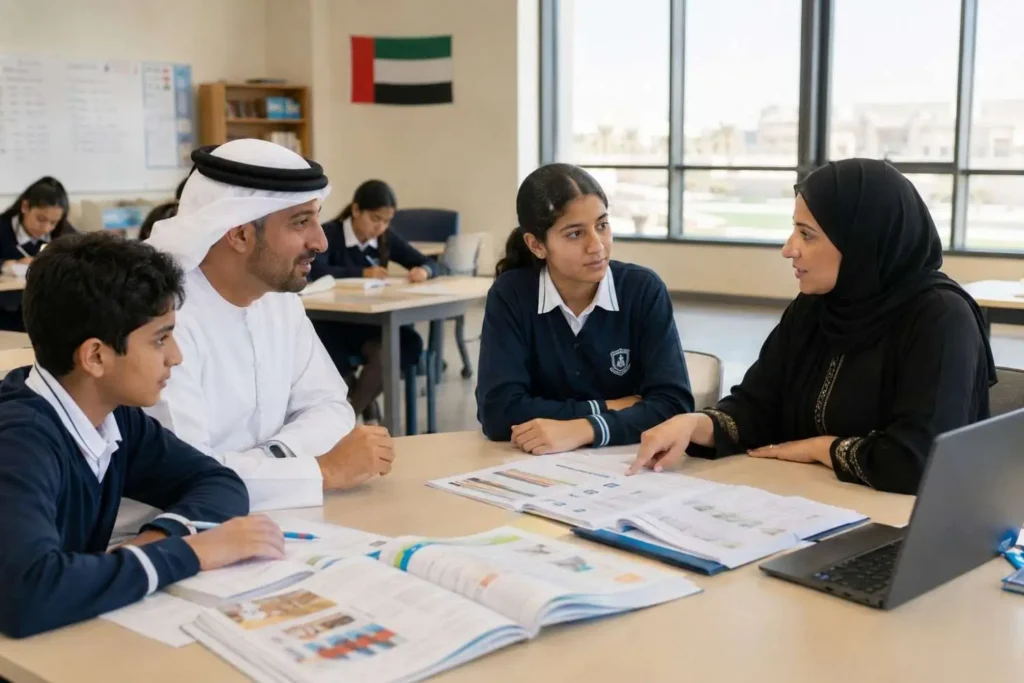
Schools reopen on August 31 and this year is different. More than 1.277 million students will walk back into over 1,180 public and private schools across the UAE — and quite a few things have changed. No homework for the little ones. New rules on devices. A new way of assessing older students. Here is everything parents need to know before the first day of term.
1. No Traditional Homework for KG to Grade 2
This is the one parents of young children have been waiting to hear. Traditional homework is being removed for all students from Kindergarten through Grade 2 in public schools. The Ministry said young children do not benefit the way older students do from routine homework and that it often creates unnecessary stress at home. Instead, families will be encouraged to read together daily. The Ministry said this builds early literacy and language skills far more effectively than worksheets. If you are a parent looking for the right school for your child this year, explore the full national directory at Schools UAE to find options by emirate, curriculum, and fees.
2. Arabic Language Assessment Comes to All Grade 1 Students
Last year, the Ministry piloted an Arabic language skills assessment across 100 schools. This year it goes nationwide. All 19,000 Grade 1 students in 162 public schools and 11,000 Grade 1 students in 130 private schools will now go through the assessment. The goal is to identify where each child stands in Arabic from the very beginning of their school journey, so schools can provide support early rather than catching problems years later. The Ministry has described Arabic language development as a top national priority for the 2026-27 year.
3. Device Use Gets Regulated for Grade 6 Public School Students
The Ministry ran a study last year with 2,500 students across nine public schools comparing classrooms that used devices freely versus those where device use was regulated. The results were clear. Non-digital classrooms showed better performance in maths, science, and Arabic. Students were more focused and better behaved. Based on those findings, the Ministry is now expanding its “Regulating the Use of Digital Tools” policy to all Grade 6 students in public schools. Digital tools are not being banned. They are being used at specific times for specific educational purposes rather than freely throughout the day. Unknown calls from companies claiming to sell school tech packages or educational devices are common at the start of every academic year. Always verify before engaging. Use the Who Called Me From This Number UAE tool to check any unfamiliar caller before sharing your contact details.
4. New Assessment Split for Cycle 3 Students
Students in Cycle 3, which covers Grades 10 to 12, will see a change in how their Group A subjects are assessed. The weighting is moving to a 50:50 split between school-based assessments and central assessments. That means half your grade comes from your school’s own tests and assignments, and the other half comes from the centrally administered national assessment. The Ministry said this better reflects how a student is actually performing throughout the year rather than relying heavily on a single exam at the end. Diagnostic assessments will also be used by teachers at the start of the year to spot learning gaps early and plan lessons around them.
5. Project-Based Learning Expands to 129,000 Students
The Ministry is expanding its Project-Based Learning and Assessment initiative to more than 129,000 students across 366 schools nationwide this year. A new integrated project specifically designed for Grade 7 students will bring together Arabic, English, maths, and science in a single combined task. The idea is to help students understand how subjects connect in real life rather than treating each one as a completely separate thing. The Ministry said the programme also gives teachers more interesting and practical ways to assess what students have actually learned. Back-to-school season puts pressure on family budgets with books, uniforms, stationery, and activity fees all arriving at once. A quick FAB Balance Check Online lets you see exactly where your account stands before spending starts without needing to visit a branch.
6. All Public Schools and Ministry-Licensed Private Schools Will Be Evaluated
Starting in the first semester of 2026-27, the Ministry is launching a full evaluation programme covering all public schools and all private schools licensed by the Ministry. The evaluation will run across two academic years. It will measure schools against approved national standards, identify their strengths and areas that need work, and give schools the information to build their own improvement plans. For parents, this means more transparency about how your child’s school is actually performing. Results of school evaluations have historically been made available to the public through regulatory bodies like KHDA in Dubai and ADEK in Abu Dhabi.
7. 24,000 Teachers and School Leaders Are Getting Trained
The Ministry is investing heavily in teachers and school leaders this year. More than 24,000 teachers, school leaders, and educational specialists will take part in a Specialised Training Week before the term begins. The week covers more than 80 training programmes and workshops. A separate programme will support over 1,700 school leaders. The wider training package includes a National AI Capacity-Building Programme developed with Hamdan Bin Mohammed Smart University, the Promising School Leaders Project, the Afaq programme with the Emirates College for Advanced Education, and a Professional Fellowship Programme. The Ministry said investment in teachers is investment in students. If you are a parent in Dubai looking for the best-rated schools for your child this academic year, check the complete guide to Schools in Dubai to find the right option by area, curriculum, and rating.
8. The National Education Charter Comes Into Daily School Life
The National Education Charter, launched by President Sheikh Mohamed bin Zayed Al Nahyan and the UAE rulers, will be actively embedded into daily school life this year. The Ministry is rolling out a back-to-school campaign called “Guided by the Charter, Building Tomorrow.” The Charter sets out the values, qualities, and future skills the UAE education system aims to develop in every student. This year the Ministry will link Charter principles to educational outcomes in the classroom, embed them into the student code of conduct, and actively engage families in applying them at home. It is a shift from the Charter being something on paper to something students and teachers actively work with every day.
Schools open August 31. Eight new policies are in effect from day one. Whether your child is in KG or Grade 12, something on this list affects them. For more UAE education news and useful guides, visit Ever List.
Written by
Sara Rayan
Search