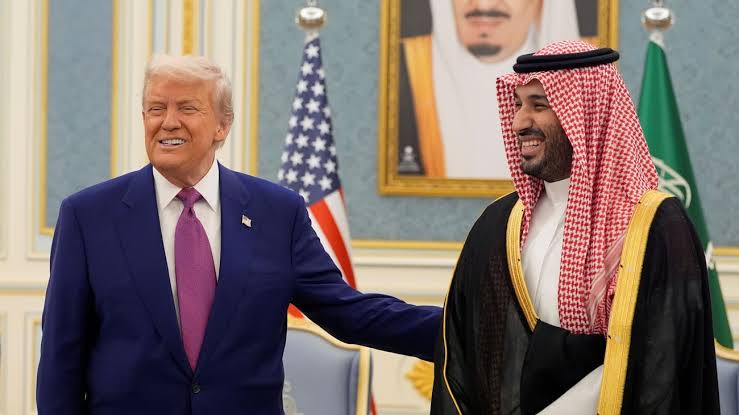
The US and Saudi Arabia signed a major civilian nuclear deal Wednesday, July 23. But then Trump added a condition nobody expected on Thursday. He wrote on social media that the deal will only be realised if Saudi Arabia normalises its relationship with Israel through the Abraham Accords. That one post changed the whole look of this deal.
What did Trump really say?
On social media Trump wrote that the nuclear agreement “will be approved, but is totally subject to Saudi Arabia joining the very respected and successful Abraham Accords.” He also said the US “is not opposed to Civil (Non-Enriched) Nuclear Facilities” under the deal. So Trump is saying two things, at the same time. He backs a civilian nuclear programme for Saudi Arabia. But he will only sign off if Saudi Arabia formally recognises Israel. That is a big deal. Saudi Arabia has yet to accept it. The Saudi Embassy in Washington didn’t respond to a request for comment on Trump’s post Thursday. Always check first before responding to such unknown calls claiming to offer political updates or investment deals, especially in times like now when news flies around. Quickly identify any unfamiliar numbers with the Who Called Me From This Number UAE tool.
What is the nuclear agreement?
Wednesday’s deal is a “123 agreement.” It is a 30-year civilian nuclear cooperation pact between the US and Saudi Arabia. It was signed by US Energy Secretary Chris Wright and Saudi Energy Minister Abdulaziz bin Salman. American companies will help Saudi Arabia develop and run a civilian nuclear programme under the deal. The deal could also allow Saudi Arabia to build a uranium enrichment facility once a joint US-Saudi study is completed. That’s the part that has made a lot of people nervous. The deal does not include the International Atomic Energy Agency’s so-called “additional protocol” that would allow for more inspections and monitoring inside Saudi Arabia. According to nuclear experts, this is a significant gap. Enrichment of uranium does not automatically make a nuclear weapon, but it opens the door to it. That is exactly the concern critics have voiced since the deal was announced. It’s always a good idea to keep an eye on your finances during big weeks of global news. Check your account in seconds with FAB Balance Check Online no need to visit a branch.
Why Is Israel Included in a US-Saudi Deal?
Trump wants Saudi Arabia in the Abraham Accords. These are the agreements signed in 2020 during Trump’s first term, when the UAE, Bahrain, Morocco and Sudan all normalised their diplomatic ties with Israel. Saudi Arabia was not involved in those deals. Trump has always seen the most important Arab power in the Middle East as the prize for getting Saudi Arabia to join the Abraham Accords. He believes that normalisation between Saudi Arabia and Israel would bring long-term stability to the region. Finishing it would also be the biggest diplomatic achievement of his second term. Netanyahu’s office welcomed the idea of Saudi Arabia joining the accords, saying it was “a historic leap forward for peace in the Middle East.” But what’s notable is that Netanyahu’s statement made no mention of the nuclear deal itself.
Why Saudi Arabia Has Not Agreed Yet
Saudi Arabia has been clear about its position for years . The kingdom will not normalize relations with Israel without a clear and credible pathway toward Palestinian statehood.” This is a point Crown Prince Mohammed bin Salman has made repeatedly, both privately and publicly. Netanyahu has flatly refused to consider Palestinian statehood, saying it is impossible for Israel’s security. That’s the gap that’s preventing any deal. Trump believes he can build a bridge over it before the end of his second term. The majority of analysts are more sceptical. The war in Gaza, now almost two years old, has further swung public opinion in Arab countries against normalisation with Israel. Protests have already broken out in some Abraham Accords signatories like Morocco and Bahrain over the deals. Far more significant and far more controversial would be the entry of Saudi Arabia.
Congress, Experts Push Back
The deal is already raising serious questions in Washington. Both Capitol Hill Republicans and Democrats have expressed concerns. Some Republicans who are generally Trump allies have publicly questioned why he would offer Saudi Arabia such a deal without first getting anything tangible in return. “The deal guarantees that Saudi Arabia will do business with American companies and not China, Russia, South Korea or France, all of whom have been offering to help build Saudi’s nuclear programme,” Secretary of State Marco Rubio told reporters in Manila. The US is not the only option for Saudi Arabia but the best, he said. White House press secretary Karoline Leavitt said on Thursday that Trump had consistently tied the nuclear deal to the Abraham Accords during the talks. But she did not say if Saudi Arabia had indeed agreed to this condition. The deal must be sent to Congress for review. As a senator in 2018, Rubio backed legislation that would require Congress to approve any nuclear deal with Saudi Arabia. That bill did not become law, so the current deal does not legally require Congress to sign off, though lawmakers can still object. It is important to keep your phone connected during a busy news week. Learn How to Check Balance in Etisalat so that your line is active whenever you need it. Take a moment.
This is one of the biggest diplomatic developments in the Middle East in years. The whole thing hinges now on whether Saudi Arabia will accept the Abraham Accords condition. For more world news and useful guides in the UAE, visit everlist.