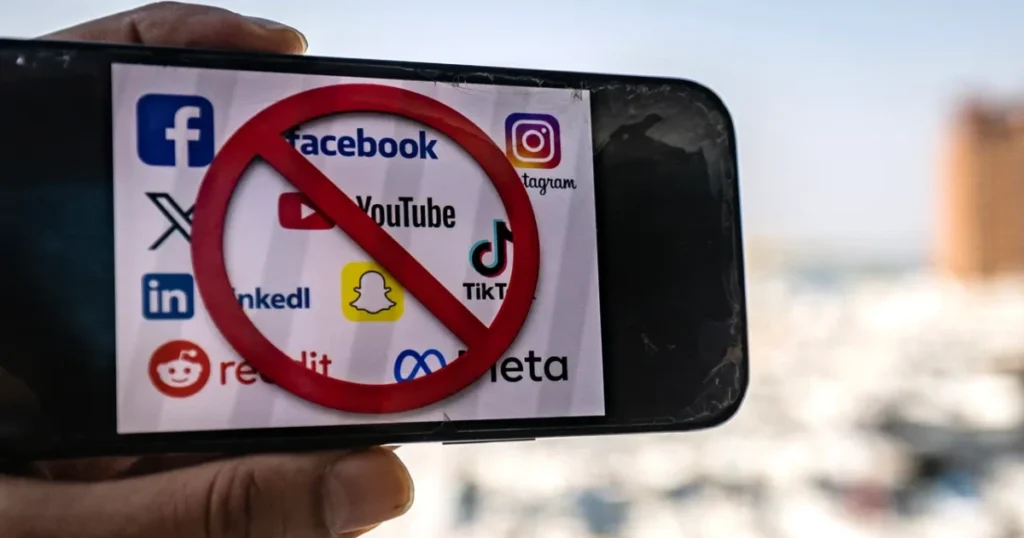
The UAE has officially joined a growing list of countries cracking down on children’s access to social media. On June 18, 2026, the UAE Cabinet issued a new resolution banning children under 15 from creating or using personal social media accounts. This makes the UAE the first Arab nation to set a legal minimum age for social media use. For UAE residents who want to stay updated on important policy changes, visit everlist.ae for guides on family, lifestyle, and daily living across the Emirates.
Overview
Under the new rules, children under 15 cannot post content, comment, share posts, join public groups, or take part in online communities. Teenagers aged 15 and 16 can still access social media, but only with stricter safeguards. These include parental controls, content filtering, limits on screen time, and restrictions on contact with strangers. Even if parents give consent, this will not count as a valid exemption for children under 15. Social media platforms have been given up to 12 months to fully implement these new rules.
Why the UAE Made This Decision
The decision follows growing concern among parents and doctors. Many doctors in the UAE have reported seeing children skip sleep and meals just to keep scrolling on their phones. Studies have linked heavy social media use among teens to higher rates of anxiety, depression, disturbed sleep, and lower self-confidence. Cases of cyberbullying have also increased sharply over the past decade. Many UAE parents have welcomed the move, citing concerns over online predators, addiction, and mental health risks linked to early social media use.
How Will Platforms Verify Age?
For years, most platforms simply asked users to enter their date of birth. Governments now say this method is too easy to fake. Under the new UAE rules, platforms must use stronger age-verification tools approved by the Child Digital Safety Council. These can include AI-powered facial scans, biometric tools, government-issued digital IDs, and other approved technologies. Families managing their daily expenses during this transition period can also explore the latest Etisalat Data Plans to find the right mobile package with built-in parental control features for their children’s devices.
Different platforms are using different methods. Meta, which owns Instagram and Facebook, uses AI to study signals like friend groups, birthday messages, and activity patterns. If a teen is suspected of lying about their age, the account is switched to a Teen Account with extra protections. TikTok uses facial age estimation along with its Family Pairing tool, which lets parents set screen-time limits and control messages. YouTube relies on Google’s identity system, asking for ID or payment verification when needed. Snapchat focuses more on parental tools through its Family Centre feature. Roblox uses one of the most advanced systems, combining facial scans, ID checks, and parent-linked accounts.
UAE Joins a Global Trend
The UAE is not alone in this move. Australia became the first country in the world to enforce a nationwide ban, which came into effect in December 2025. Within days, Meta removed nearly 550,000 underage accounts from Facebook, Instagram, and Threads. Indonesia has also implemented a similar ban. Many other countries are following closely behind. Below is the full list of nations that have passed or tabled legislation but are still awaiting final approval or implementation.