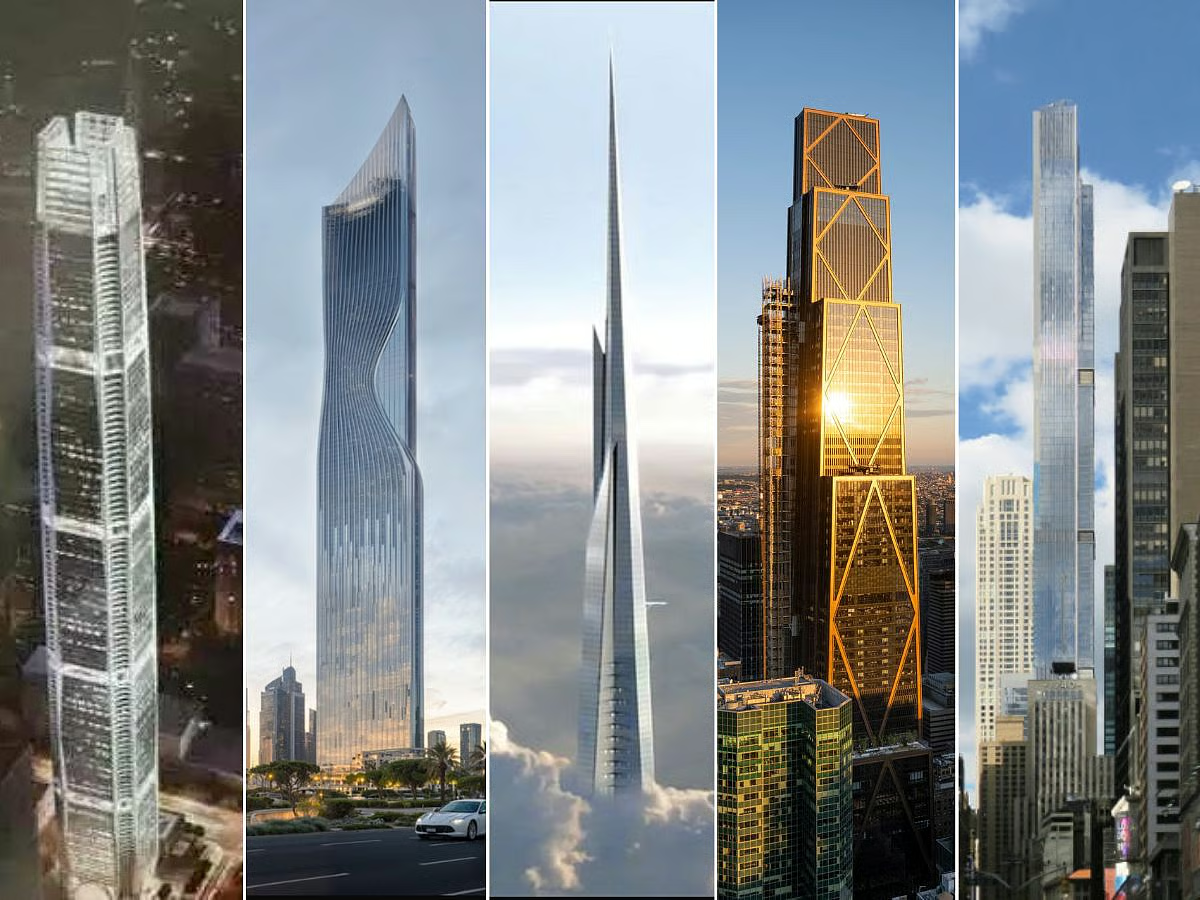
When people talk about the UAE, they often talk about its towers. The Burj Khalifa rising 828 metres above Dubai. The Etihad Towers lining the Abu Dhabi Corniche. The glittering wall of skyscrapers along Dubai Marina. These buildings are impossible to ignore. But those who see only the steel and glass are missing the bigger story. The UAE’s towers are impressive. But the minds that planned them, built them, and continue to shape this nation are what truly define its success.
A Skyline Built in Decades, Not Centuries
Less than 60 years ago, most of what is now the UAE was desert. There were no highways, no airports, no skyscrapers. Today, the UAE ranks third in the world for completed buildings exceeding 150 metres, with 345 such structures standing across its cities. Dubai alone has 28 completed buildings taller than 300 metres — more than any other city on earth. It is also home to the world’s tallest building, the world’s tallest all-hotel tower, and one of the most iconic waterfront skylines ever created. This did not happen by accident. It happened because of vision. Leaders set bold targets and trusted brilliant people to deliver them. Engineers, architects, planners, financiers, and workers from across the world came together under a single purpose — to build something that had never been built before. The result is a skyline that countries with centuries of history are still trying to match. If you want to experience some of the world’s most impressive surroundings at street level, a great meal in one of Dubai’s landmark neighbourhoods is the perfect start — check out the Best Restaurants in Dubai for top dining options across the city.
Buildings as Symbols, Not Just Structures
Every great skyscraper in the UAE carries a meaning beyond its height. The Burj Khalifa is not just the world’s tallest building — it is a statement that this country has no ceiling on what it can achieve. The design, inspired by the desert flower Hymenocallis, blends nature with engineering in a way that no other tower has attempted at that scale. The Ciel Tower, completed in 2024, became the world’s tallest all-hotel building. It was not built just to host guests — it was built to raise the bar globally. Even the older towers along Sheikh Zayed Road, once surrounded by open desert, now form a continuous corridor of ambition that stretches for kilometres. Each decade of construction in the UAE tells a different chapter in the story of a nation growing faster than anyone expected. New towers now under construction — including Burj Azizi on Sheikh Zayed Road, which will rise 725 metres and become the second tallest building in the world — show that the story is far from over.
The Minds Behind the Monuments
You cannot separate the UAE’s skyline from the human intelligence that created it. Every tower that rises in Dubai or Abu Dhabi represents thousands of decisions made by engineers, urban planners, sustainability experts, and construction specialists. The UAE has long understood that buildings can be built with money, but great cities are built with talent. That is why the country has consistently invested in education, attracted global expertise, and created pathways for skilled professionals to put down roots here. The results are visible not just in construction but in every sector. The UAE runs one of the most efficient airports in the world. It built and launched its own Mars mission. It established the world’s first Ministry of Artificial Intelligence. It leads the region in renewable energy, with the Mohammed bin Rashid Al Maktoum Solar Park on track to become one of the largest solar power installations on the planet. None of these achievements happened because of oil money alone. They happened because the UAE backed its vision with the right people. Managing your personal finances well is part of building your own success story in the UAE — a quick FAB Balance Check Online keeps your account in order so you can focus on what matters.
Resilience Is Part of the Design
A skyline this impressive does not come without setbacks. The UAE has faced global financial crises, regional conflicts, a global pandemic, and more recently the extraordinary pressures of a war on its doorstep. Each time, the country has responded not by stepping back but by stepping forward. Dubai recovered from the 2008 financial crash and built more. It hosted Expo 2020 during a global pandemic and still attracted over 24 million visitors. Abu Dhabi continued investing in diversification and innovation even as oil markets fluctuated. The Gold Line metro, a Dh34 billion underground rail project recently approved in Dubai, is the latest example of a country that does not slow down when things get difficult — it doubles down. That resilience is not just built into the infrastructure. It is built into the people who call this place home and the culture that this leadership has cultivated over more than five decades.
What the Skyline Really Tells You
A skyline is not just architecture. It is a mirror of the values, priorities, and character of the people who built it. The UAE’s skyline tells you this is a nation that thinks big, plans carefully, and executes with discipline. It tells you that ambition here is not just allowed — it is expected. But perhaps most importantly, the UAE’s story tells you that towers are only the visible part of what is being built. The invisible construction — the institutions, the policies, the education systems, the healthcare networks, the digital infrastructure — is equally impressive and equally the result of great minds working toward a shared goal. If you are connected to the UAE and want to manage your phone and finances efficiently while staying informed, take a moment to learn How to Check Balance in Etisalat so your connection stays strong wherever you are in the country.
The skyscrapers of the UAE will keep rising. And so will the nation behind them. For more inspiring stories and useful guides about life in the UAE, visit Ever List.