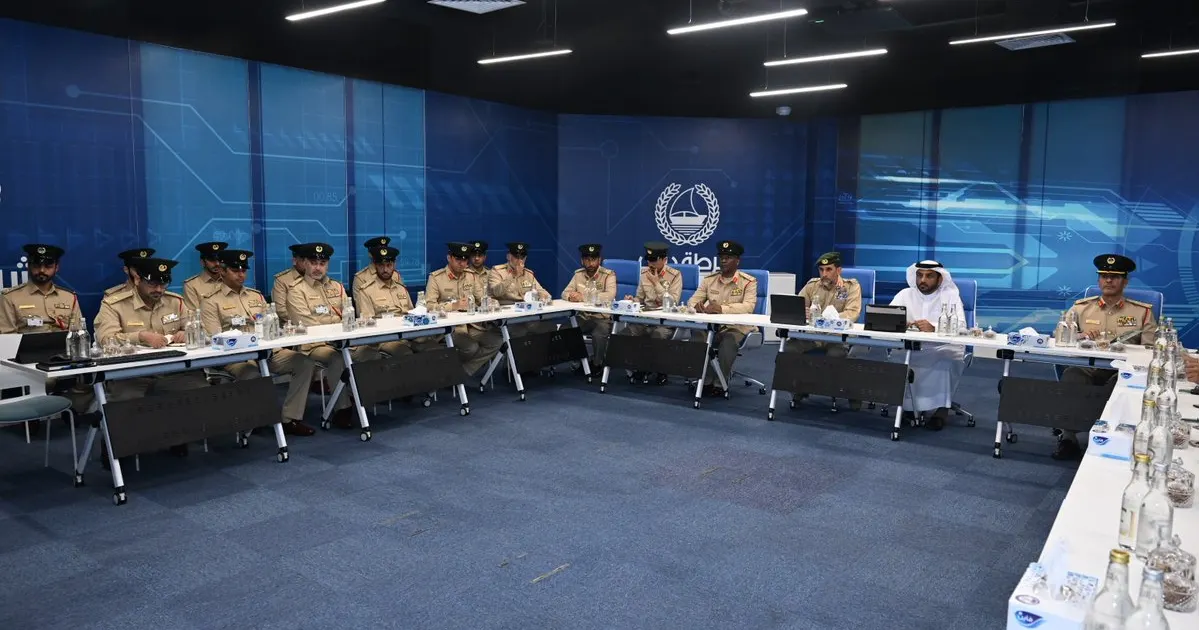
As regional tensions from the US-Iran conflict reached their peak in recent weeks, Dubai Police’s AI-powered Maritime Operations Centre quietly became one of the most important command rooms in the country. Working around the clock, the centre coordinated security responses, rescue operations, and coastal surveillance to ensure Dubai’s waters remained safe. The full story of how the centre operated during this critical period has now been revealed in an exclusive interview with Gulf News.
One Room, Many Agencies Working Together
Brigadier Dr Hassan Suhail Al Suwaidi, Director of Dubai Police Ports Station, described the Maritime Operations Centre as the central hub that brought together every major government agency under one roof during the period of heightened security. The national guard, DP World, immigration officials, port operators, maritime authorities, and private-sector partners all worked side by side through the operations room. Brigadier Al Suwaidi said the centre allowed all these teams to coordinate seamlessly, manage incidents efficiently, and respond rapidly to any maritime emergency, security report, or operational requirement across Dubai’s waters. The operations room received all incoming maritime reports — whether incidents, emergencies, or security concerns — and directed the right teams to act immediately. During sensitive times like these, unknown or suspicious calls also tend to increase. If you receive a call from an unfamiliar number, always verify before responding — use the Who Called Me From This Number UAE tool to identify any unknown caller quickly and protect yourself.
AI, Radar and Smart Cameras Power the Centre
The Maritime Operations Centre is not just a traditional command room. It uses artificial intelligence, smart surveillance systems, radar technology, and cameras to monitor Dubai’s coastline and territorial waters in real time. A marine scanning device helps detect, locate, and recover suspicious objects at sea, adding an extra layer of security to coastal operations. Private maritime operators also play a supporting role by sharing live information from their vessels and facilities, which expands Dubai’s surveillance network and improves overall situational awareness across its waters. Among the specialist units deployed during the recent period of tension were Dubai Police diving teams, which responded to reports of suspicious debris and unidentified objects at sea. Divers recovered and inspected materials believed to be linked to drones and other aerial objects, safely removing potentially hazardous items as part of wider maritime security operations.
24/7 Patrols and Rapid Response Targets
Dubai’s maritime emergency response system never sleeps. The force runs 24 hours a day, seven days a week, through 12 sea patrols, seven land patrols, two beach buggy patrols, and two foot patrol units deployed across key coastal locations. All teams operate on a shift-based system to ensure someone is always ready to respond. Brigadier Al Suwaidi said Dubai Police has set clear performance targets for response times across all categories of maritime incidents — from vessel breakdowns and accidents to drowning risks and distress calls. He added that in many parts of the world, maritime response times are hard to measure because conditions vary too much. Dubai Police has set clear targets and continues to meet them. To stay on top of your own finances and emergency readiness during such times, a quick FAB Balance Check Online ensures your account is active and accessible whenever you need it.
Rescues, Beach Safety and Victim Support
While technology powers the centre, saving lives remains the core mission. Major Saeed Khalifa Al Mazrouei, Head of the General Shift Section, said several rescue operations were carried out this year, including a recent incident where tourists were safely brought ashore after their vessel suffered an engine failure at sea. Police teams also regularly help boat owners, jet ski users, and maritime visitors stranded by mechanical failures or bad weather. Beyond water rescues, Dubai Police has expanded beach safety efforts with dedicated teams working alongside tourism and environmental authorities. During New Year’s Eve celebrations, officers reunited seven children who became separated from their families in large crowds, including one child with special needs who had wandered far before being safely located. Dubai Police has also expanded its victim-support programmes — officers continue to visit injured individuals in hospitals and monitor their recovery even after incidents are closed, particularly for tourists who may need extra help. Staying connected during emergencies is essential — knowing How to Check Balance in Etisalat ensures your phone stays active so you can always reach help when you need it.
Key Numbers From Dubai Ports Police
The scale of Dubai Police’s maritime operations is significant. In the past year alone, the Maritime Operations Room handled 2,644 reports. Officers recorded 143 marine accidents and detected 1,313 marine violations, the highest among them being 658 jet ski violations. Inspections found that 26 jet ski rental companies were checked, with 24 found in violation. A total of 63 jet skis were seized, and 52 failed technical inspection. Key fines include Dh1,000 for operating a jet ski with an expired licence, not wearing a life jacket, or entering restricted swimming areas, and Dh2,000 for endangering or harassing others. Looking ahead, Dubai Police plans to expand the use of drone-box systems at beaches and island locations to strengthen future coastal monitoring and emergency response even further.
Dubai’s coastline is one of its most valuable assets. The AI Maritime Operations Centre is proof that the emirate is not leaving its protection to chance. For more UAE news and useful guides, visit everlist.ae.