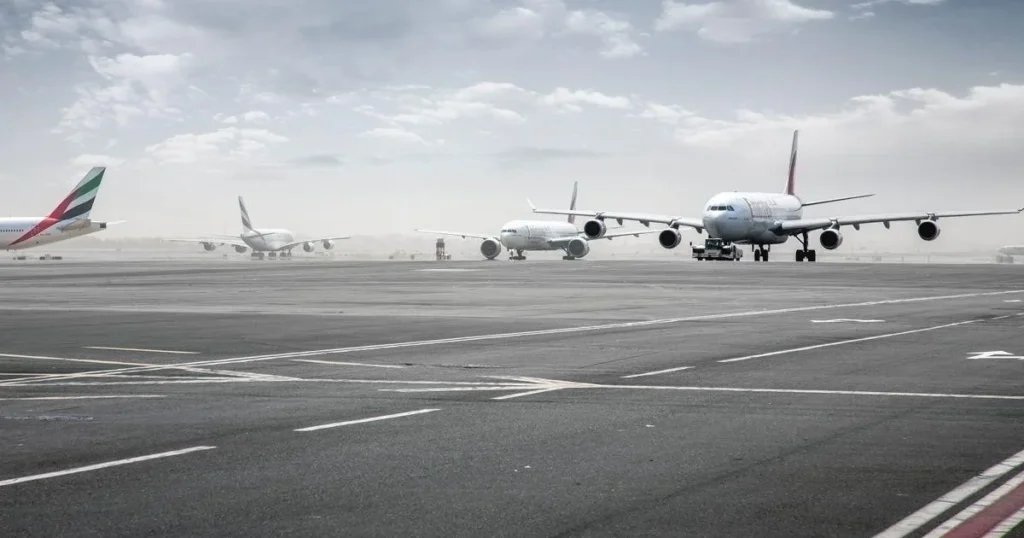
Sudden changes in the weather at the start of the morning caused unexpected pressure on the operations of Dubai Airports, as flights were disrupted in all of its terminals. The authorities of the airports verified that 12 flights were cancelled and 23 incoming flights were diverted to other airports as a safety measure. This was an inconvenience when the flights were in transit in the morning, as it involved the departing and incoming passengers. Emergency response teams were put on standby, and contacts with important services such as hospitals in Dubai were kept to ensure that the well-being of the passengers was maintained throughout the situation.
Flight Cancellations and Diversions
The visibility was low, and the weather was unstable and thus unsafe to have several aircraft either landing or departing at the right time. The air traffic control was in very close collaboration with the airline operators to control the spacing and the runways of aircraft. Flights that were already airborne were diverted to other nearby airports, and others that were to fly were cancelled to avoid congestion and safety problems. Dubai Airports were keen to note that every decision regarding it was made in strict adherence to international aviation safety standards.
Passenger Experience During the Disruption
Customers on the terminal side took more time to wait and also underwent reschedules at short notice. The Airport personnel were assigned to every terminal to help passengers to rebook, pick up baggage, and give general directions. Airways had frequent updates based on display screens and mobile notifications. On the one hand, some would complain of frustration due to delays, but on the other hand, most passengers took the time to relax, shop or even dine, and many of the choices they made were inspired by the Best food in Dubai, which is widely known to have numerous choices and also quality.
Airlines Work to Restore Normal Operations
With weather conditions slowly improving later in the morning, airlines started the task of resuming normal flight operations. This included the repositioning of aircraft, rearranging the schedules of the crews and dealing with accidents of late arrivals. Others lost connecting flights, especially those on long journeys, and the airlines facilitated the provision of alternate routes or accommodation. Aviation experts observed that even after weather disturbances have been ameliorated, it is common to have a recovery process that takes several hours.
Infrastructure and Preparedness are Necessary
Dubai Airports highlighted that its state-of-the-art infrastructure and emergency planning reduce the total effects of the disruption. Through real-time weather monitoring systems, early warnings were possible, and the trained operational teams were instrumental in ensuring smooth coordination of activities within the departments. The aviation service providers and companies in Dubai operating within logistics, transport, and airport services were also found to be of utmost importance in controlling the influx of passengers and keeping order during the most critical times of disruption.
Greater Impact on Airport-Related Services
The flight delays impacted adjacent services, including hotels, transport services and shops in the short term. Hotels in the area recorded more bookings of last-minute flights and stranded passengers, and taxi and ride-hailing services were more requested. Airport officials instructed passengers to be patient and adaptable as safety is the ultimate priority whenever unpredictable weather conditions arise.
Travel Planning and Financing Considerations
With the schedules standardised, passengers were advised to remain in contact with the airlines in order to get updated on the travel information. There was also a reminder to the travellers to check on travel insurance cover and payment plans, with banks in Dubai having a significant role to play in assisting the customers to cover unexpected expenses that may arise as a result of delays or cancellations. Dubai Airports kept on making official updates until the flight movements went back to normal levels.
Conclusion: A Managed Reaction to an Emergency
Although the cancellation of 12 flights and diversion of 23 others was an inconvenience to the people, the response of Dubai Airports was a good show of handling crises and coordination. The incident highlighted the importance of readiness, effective communication, and collaboration between the government, airlines, and customers. When things started to become normal, Dubai proved once again that it was capable of dealing with its challenges, and it still remained among the top world aviation destinations.
For updated information on essential services, travel resources, and local business listings across the UAE, visit everlist.ae, a reliable platform connecting residents and visitors with verified services in Dubai.