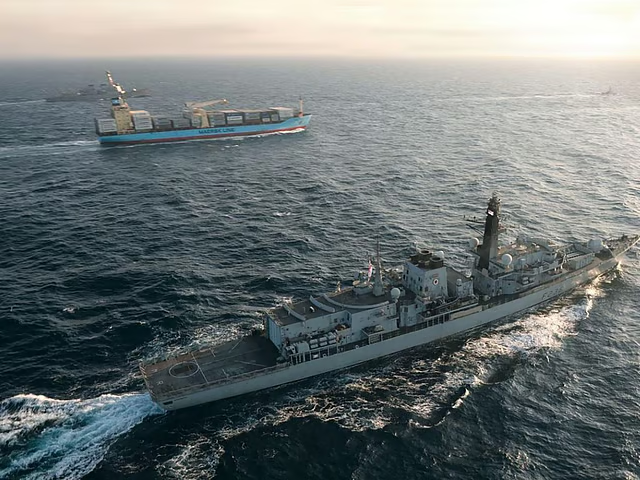
The oil prices have in dramatic twist soared as violence occurs between the United States, Israel, and Iran. The heightened military activities in the area have derailed essential oil supply chains with the crude oil prices peaking nowadays. It has put the world markets, the prices of energy, and the average customers on the alert. Even within communities in Dubai, people are experiencing the economic ripple effect as the fuel prices are soaring and cost of living is increasing.
This war started with the concerted attacks by the US and Israel on the Iranian strategic sites. The retaliatory measures by Iran have increased the panic of an actual widening war, which has had effects on the world supply and trading of oil. The Strait of Hormuz is one of the key regions that have been affected as a major waterway where close to one-fifth of the world crude oil passes. The complicity has caused much uncertainty in international energy market with sharp spikes in the price of crude.
Oil Prices Surge
The global standard, the markets of the brent crude oil, have soared up by as much as 8 percent in the recent trading periods, reaching briefly the levels of over $82 per barrel before finding its way back to $78 to $80. The US standard, West Texas Intermediate (WTI), has not been left behind and it has gained more than 8 per cent to jump into approximately $72 to $75 per barrel. This sharp rise is one of the biggest price gains in recent months, which indicates how volatile oil markets are to geopolitics.
The increase in the oil prices is not only impacting markets but also life around the region. Both residents and tourists are experiencing increased fuel prices and transportation expenses, which, in its turn, affect the prices of goods and services. The popularity of the destinations and places to visit in Ras Al Khaimah continue to attract visitors. The beaches, mountains and cultural tourism attractions that are the main attractions in the emirate lure tourists to the region giving them a temporary reprieve on the economic jitters.
Economic and Social Effects
The oil price increase is developing direct economic pressure. In the Gulf region UAE has been among the countries that have been adjusting the prices of petrol and diesel to the global price of crude oil making it costly to motorists and businesses. These changes affect day to day expenditure, transportation expenses, and overall price-friendliness of products and services, which puts pressure on the household budgets.
As the prices increase, the residents are increasingly monitoring financial tools that allow them to control costs. People depend on the smart products such as Credit Cards in Dubai, which offer the incentives in the form of fuel cashback, travel discounts, and flexible payment option. The tools have become necessary in coping with the abrupt rise in cost of living and dealing with daily financial obligations.
Petrol and Diesel Rates in AED
| Type | Before (AED) | Now (AED) |
|---|---|---|
| Diesel | 2.52 | 2.72 |
| Eplus 91 | 2.26 | 2.40 |
| Special 95 | 2.33 | 2.48 |
| Super 98 | 2.45 | 2.59 |
Market Outlook and Predictions
Experts indicate that oil prices might have a strong upsurge in case the war is not solved. The long-term interference with the Strait of Hormuz might even make Brent crude to hit the 100 barrels per barrel mark, which will result in additional fuel prices across the world. This would affect the inflation, transportation costs, and even the price of common commodities which impact both the household and industries.
The situation has already been met with a response in stock markets, and the energy and defense markets have been very volatile. Investors are also keeping a close eye on the situation, since geopolitical instability in the Middle East may easily affect international markets very quickly. Insurance and shipping rates will also increase since the companies will consider risks associated with conducting business in a conflict area.
Broader Implications
The conflict that is undergoing is not only local but also universal. The oil supply disturbances would hamper the economic growth of those countries which are largely reliant on imports and cause inflationary pressures in the global economy. Governments are evaluating how to stabilize supply, by increasing local output, or diversifying the source of imports and households and businesses are adapting to increased prices.
The scenario highlights how geopolitics and the daily life are interrelated. The spikes in fuel prices are not only market but also community-based as well as transportation and the prices of goods. In this regard, financial preparedness and planning have become as significant as ever to both residents and businesses in the affected regions.
Conclusion
The oil markets will be volatile as the US-Iran-Israel conflict is ongoing. The impact of an increase in prices and economic uncertainty is being experienced in communities all over the world; Dubai is not an exception. Customers and tourists are changing their expenditures, utilizing financial instruments, and exploring new ways to deal with the increased prices. Although some destinations such as Ras Al Khaimah have remained open to the guests, the overall economic contribution cannot be ignored.
In the weeks ahead, global attention will focus on the resolution of the conflict and its impact on oil supply. Whether prices stabilize or continue to rise, the situation highlights the critical role of energy security in everyday life, a topic that Ever List continues to track and provide updates on for residents and travelers in the region.