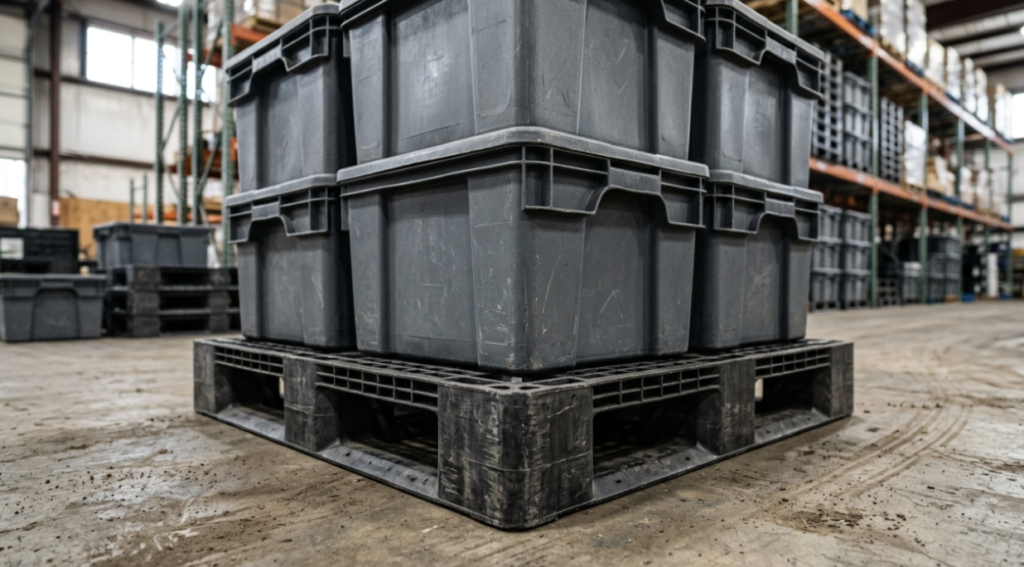
Industrial businesses often move heavy goods, machines, raw materials, and large containers every day. Standard pallets may work for light loads, but they can struggle under repeated heavy use.
A business should consider heavy-duty pallets when its loads regularly exceed standard pallet limits, handling conditions are demanding, or pallet damage is causing delays and replacement costs.
The right pallet can provide better support, improve warehouse safety, and handle repeated movement through forklifts, racks, conveyors, and transport vehicles. Businesses should also look at long-term operating costs instead of choosing pallets based only on their purchase price.
Signs Your Business May Need Heavy-Duty Pallets
Heavy-duty pallets are not needed for every operation. They become more useful when a business handles demanding loads or works in conditions that place extra stress on pallets.
Frequent breakage, unstable loads, and high replacement rates are common warning signs. Businesses should review how pallets are used throughout the day before making a change.
This includes checking product weight, storage methods, travel distance, and handling equipment. If pallets regularly fail under normal working conditions, moving to a stronger design may help reduce interruptions and improve overall warehouse performance.
1. Your Loads Are Consistently Heavy
One of the clearest reasons to invest in stronger pallets is the weight of the products being moved. Industrial facilities may handle machinery parts, metal goods, construction materials, drums, or large equipment.
These loads can place significant pressure on pallet decks and support blocks. If standard pallets bend or crack under these loads, they may create safety risks and product damage. A heavy-duty design provides stronger support for demanding applications.
Businesses should check both static and dynamic load ratings because a pallet may support a heavy load while stationary but require a different rating when moved.
2. Pallets Are Breaking Too Often
Frequent pallet damage can increase operating costs over time. A pallet that breaks during lifting or storage can damage products and stop normal warehouse work. Staff may also spend extra time removing damaged pallets and moving goods to replacements.
If these problems happen regularly, the business should review whether the current pallet type is suitable. Heavy-duty pallets are designed for demanding use and repeated handling.
Before changing the full pallet fleet, managers should record where failures happen and what causes them. This can help confirm whether stronger pallets are the right solution.
3. Forklifts Handle Pallets Throughout the Day
Frequent forklift use places repeated stress on pallets. Forks can create pressure on the bottom structure, especially when operators lift loads from different angles or positions. Industrial warehouses with several handling cycles each day may need pallets that can withstand this repeated movement.
A stronger pallet can provide better support during lifting, turning, stacking, and unloading. Businesses should also check that the pallet design matches their forklift setup. Proper fork entry points can reduce handling problems and help operators move loads more safely through busy warehouse areas.
4. Loads Stay in Storage for Long Periods
Long-term storage can place constant pressure on pallets. A loaded pallet may remain in a rack or floor position for weeks or months. During this time, the pallet needs to maintain its shape and support the load without becoming weak or unstable.
Heavy-duty pallets can be useful for operations where goods stay stored for extended periods. Businesses should check the pallet’s static load capacity and its suitability for the storage system. This is especially important when pallets are stacked or placed in high-bay warehouse racks where a failure could affect other stored goods.
5. Your Warehouse Uses Automated Equipment
Automated warehouses need pallets that provide consistent and reliable performance. Conveyors, automated storage systems, robotic equipment, and pallet transfer units often work with fixed pallet dimensions.
A damaged or weak pallet can interrupt the process and require manual intervention. For businesses using automation, pallet quality becomes an important part of material flow.
Heavy-duty plastic pallets can be considered where their size, load rating, and design match the equipment. Before making a large purchase, businesses should test pallets with their conveyors, storage systems, and robotic equipment to confirm proper movement.
6. Your Business Faces High Replacement Costs
Buying pallets again and again can become expensive. The initial price of a pallet does not show the full cost of ownership. Businesses should also consider how often pallets are replaced, how much labor is needed to remove damaged units, and whether broken pallets cause product losses.
If standard pallets have a short working life, a stronger option may provide better value over time. Managers can compare purchase price, expected service life, repair needs, and replacement rates. This gives a clearer view of whether a heavy-duty pallet can reduce long-term operating costs.
7. Products Need Better Load Stability
Some products are difficult to stack or keep stable during movement. Large boxes, metal parts, drums, machinery, and uneven loads can shift when pallets are lifted or transported. A stronger pallet with a suitable deck design can provide a more stable base.
This helps reduce movement during forklift handling and transport. Businesses should also consider how products are secured with stretch wrap, straps, or other methods.
The pallet alone cannot prevent every load problem, but choosing the right design can provide a stronger foundation and reduce the chance of shifting goods.
8. Pallets Move Between Multiple Locations
Businesses that move goods between warehouses, factories, distribution centers, and customers may place heavy demands on pallets.
A pallet can be lifted many times before reaching its final destination. It may also face different storage systems, vehicles, and handling methods along the way. Heavy-duty pallets can be useful when the same units need to survive repeated transport and handling cycles.
Businesses should select a pallet that works across the full supply chain rather than focusing only on one facility. Standardizing suitable pallets can also make movement between locations easier.
Factors to Check Before Buying Heavy-Duty Pallets
- Match the application: Choose pallets based on products, storage systems, handling equipment, and working conditions.
- Check pallet size: Make sure dimensions fit racks, conveyors, lifts, and other warehouse equipment.
- Review reusability: Consider how many handling cycles the pallet can safely support.
- Check load ratings: Compare both static and dynamic capacity based on how the pallet will be used.
- Consider load distribution: Make sure the pallet can safely support evenly spread or concentrated loads.
- Check rack compatibility: Confirm that the pallet provides proper support and clearance inside storage racks.
- Test conveyor compatibility: Check that the pallet moves smoothly through conveyors and transfer equipment.
- Review the environment: Choose a pallet suitable for moisture, dust, chemicals, temperature changes, or frequent washing.
- Consider hygiene needs: Select easy-to-clean designs when handling food or sensitive products.
- Test before buying: Use samples with actual equipment to identify problems before placing a large order.
How Heavy-Duty Pallets Can Support Long-Term Efficiency
The main benefit of heavy-duty pallets is not simply greater strength. They can support more reliable handling when a business has demanding loads and repeated movement. Fewer damaged pallets can mean fewer interruptions, less product risk, and lower replacement needs.
Stronger pallets can also support better storage practices when their design matches the rack system. However, businesses should avoid upgrading without checking actual needs.
A heavy-duty pallet may cost more than a standard option, so its value depends on how much extra service and reliability it provides. A proper cost review can support a smarter purchasing decision.
When Heavy-Duty Pallets May Not Be Necessary?
Not every warehouse needs heavy-duty pallets. Businesses handling light cartons, low-volume products, or short-distance loads may find standard pallets suitable for their needs. Upgrading without a clear reason can increase purchasing costs without providing a useful return.
Managers should first review pallet damage, load weight, handling frequency, storage conditions, and equipment requirements.
If existing pallets perform reliably and meet safety requirements, there may be little reason to change them. The goal is to choose a pallet that matches the application, not simply the strongest or most expensive option available.
Conclusion
Heavy-duty pallets become a practical investment when businesses handle heavy loads, experience frequent pallet damage, use forklifts or automation heavily, or face high replacement costs.
They can provide stronger support for demanding storage and transport conditions while helping reduce handling interruptions. Before upgrading, businesses should review load ratings, pallet dimensions, rack compatibility, conveyor requirements, working conditions, and expected service life.
A small equipment and load test can also help confirm the right choice. When the pallet matches the operation, it can support safer handling, smoother material movement, and better long-term value.