Vision does not always change in an obvious or sudden way. In many cases, people gradually adapt to seeing less clearly, needing more light or making small adjustments to everyday habits without immediately questioning why. At Aziz Ophthalmology, Dr. Hassan Abdul Aziz provides eye care at Emirates Hospital Jumeirah in Dubai, combining clinical examination with diagnostic technology to investigate visual changes and conditions involving different structures of the eye. The practice provides care across areas including refractive vision correction, cataract and retinal conditions, with treatment decisions based on individual assessment.
Recognising gradual changes is particularly important because good vision is not defined only by the ability to read an eye chart. Patients looking for an ophthalmologist in Jumeirah may notice that colours seem less vivid, reading has become more tiring or one eye no longer sees quite as clearly as the other. These symptoms can have different explanations, which is why persistent changes should be investigated rather than normalised or managed through self-diagnosis.
What changes in vision can develop gradually?
Not all eye problems announce themselves with pain or sudden visual loss. Some changes develop over months or even years, giving the brain time to adapt. A person may move closer to text, increase the brightness of a screen or need stronger lighting without consciously recognising these behaviours as signs that visual quality has changed.
Blurred vision is one example, but patients may also notice reduced contrast, glare, difficulty focusing or changes in colour perception. Vision in one eye may gradually become different from the other, yet this can remain unnoticed because the better-seeing eye compensates during normal binocular vision.
Age can contribute to certain visual changes, but it should not automatically be assumed to explain every symptom. Refractive errors, ocular surface changes, cataracts and retinal conditions can affect vision in different ways. An ophthalmic assessment helps determine whether a change is expected, requires monitoring or has an underlying cause that may benefit from treatment.
Why should blurred vision not simply be considered normal?
Blurred vision describes a symptom rather than a diagnosis. Light must travel through the cornea and natural lens before reaching the retina, and several parts of this pathway can influence image quality. A change at any stage may affect how clearly the patient sees, which is why blurred vision cannot reliably be diagnosed from the symptom alone.
A refractive change may mean that glasses or contact lenses need adjustment. An unstable tear film can cause fluctuating clarity, while changes in the natural lens may progressively reduce sharpness. Conditions involving the retina can also affect central vision, detail or distortion. The way blurring develops, whether it affects one or both eyes and whether it remains constant can provide useful clinical information.
Trying different glasses, eye drops or home remedies without understanding the cause may temporarily change symptoms without addressing the underlying issue. When blurring persists or progresses, an eye examination provides the information needed to distinguish between possible causes and determine whether correction, monitoring or treatment should be considered.
How can the need for more light reveal changes in visual quality?
One subtle sign that patients sometimes overlook is the increasing need for illumination. Reading a menu, checking small print or performing detailed tasks may become easier only under brighter light. Because people can compensate simply by switching on another lamp, the change may initially seem unimportant.
The amount and quality of light reaching the retina can be influenced by several factors. Changes in the optical structures of the eye may reduce contrast or make it harder to distinguish fine details under less favourable lighting. The natural lens can also become less transparent over time, as occurs with cataract formation, although needing more light does not by itself confirm that a cataract is present.
If this change appears alongside increasing glare, cloudy vision or reduced colour intensity, an examination can help establish what is happening. Patients should avoid assuming that supplements, exercises or other self-directed methods can reverse a structural change inside the eye. The appropriate approach depends on identifying which part of the visual system is responsible.
What can increasing glare and halos around lights mean?
Glare and halos can become noticeable when looking at headlights, streetlights or other bright sources. Some people experience them occasionally, while others notice that they gradually become more intrusive. The pattern and progression of these symptoms are important, particularly when they begin to affect driving or other routine activities.
Different ocular factors can influence how light is focused and transmitted. Refractive errors, changes affecting the ocular surface, corneal characteristics and alterations in the natural lens may all contribute to reduced visual quality around bright lights. Cataracts can produce glare as the lens becomes cloudy, but an examination is necessary before attributing the symptom to this condition.
When glare becomes persistent, simply avoiding night driving or increasing screen brightness addresses the inconvenience rather than its cause. An ophthalmologist can evaluate the optical structures of the eye and determine whether the symptom is related to a correctable refractive issue or another condition. Understanding the source of glare allows the clinical response to be tailored to the individual patient.
Why can one eye change without the patient noticing immediately?
Human vision normally combines information from both eyes into a single visual experience. This can sometimes hide a gradual difference between them. If one eye begins to lose clarity while the other continues to see well, the brain may compensate sufficiently for the patient to continue normal activities.
A simple everyday observation may eventually reveal the difference: covering one eye while reading, for example, may make the discrepancy more obvious. However, patients should not use home vision checks as a substitute for examination. A difference between the eyes can have many possible explanations, from unequal refractive errors to changes involving the lens, retina or other ocular structures.
This is one reason regular assessment can be valuable even when daily vision still feels functional. An ophthalmologist can examine each eye independently, compare findings and decide whether further investigation is necessary. A persistent new difference between the eyes deserves professional evaluation rather than waiting until binocular vision is noticeably affected.
How does an ophthalmologist investigate progressive visual changes?
The investigation begins with understanding exactly what the patient has noticed. A gradual reduction in sharpness is different from fluctuating vision, while distortion or difficulty in low light can point the examination toward different structures. The patient’s age, previous eye history, general health and use of glasses or contact lenses also provide relevant context.
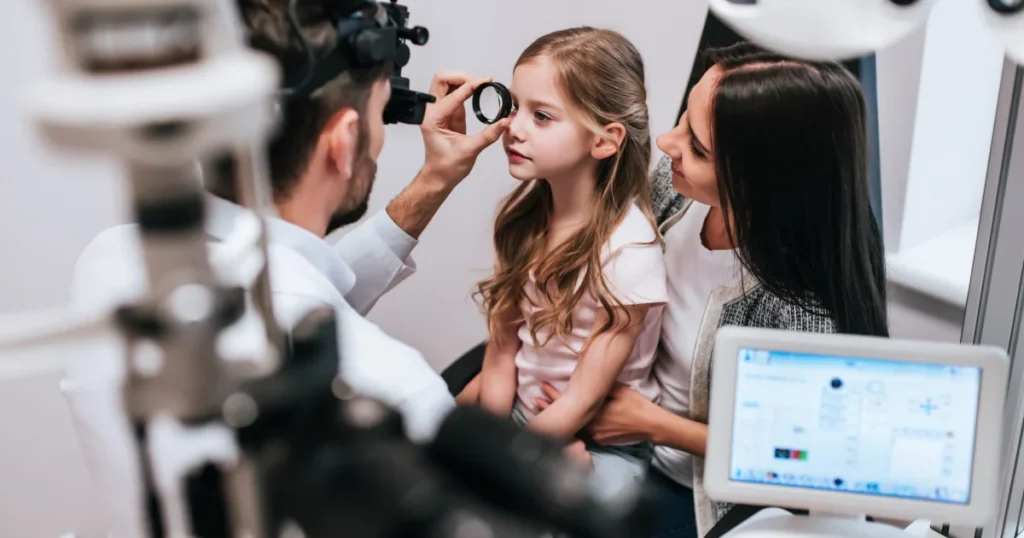
At Aziz Ophthalmology, patients undergo an initial evaluation with the optometrist before seeing Dr. Aziz. Depending on the findings, assessment can include refraction, examination of the cornea and natural lens, intraocular pressure measurement and evaluation of the retina. Diagnostic imaging can add detailed information when clinically appropriate, rather than being performed without a specific purpose.
Technologies such as corneal topography and tomography can assess the front of the eye, while ocular biometry supports lens-related planning and OCT can provide detailed information about retinal structures. These examinations do not replace clinical judgment. Their role is to help the ophthalmologist understand the cause of a visual change and determine the appropriate next step.
Can gradual visual changes be treated effectively?
Treatment depends entirely on the cause. If a refractive error has changed, updated optical correction may be sufficient. If the natural lens has become cloudy enough to interfere with daily life, cataract surgery may be considered. Other conditions may require monitoring, medical management or procedures directed at a different structure of the eye.
For this reason, there is no universal treatment for declining visual quality. Even patients describing similar symptoms may have different diagnoses. When surgery is considered, further assessment is needed to determine suitability and discuss realistic expectations based on ocular anatomy, visual needs and the condition being treated.
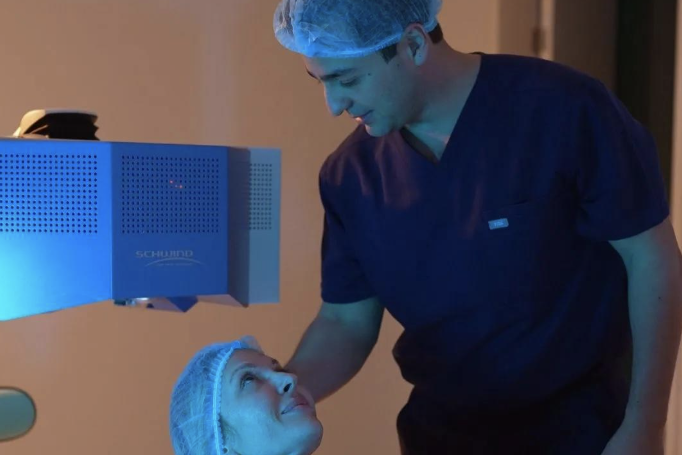
Aziz Ophthalmology offers different ophthalmic pathways in Dubai, including laser vision correction, cataract surgery and retinal care. The appropriate option is considered only after evaluation. Patients should be cautious about products or online methods claiming to restore vision without diagnosis, because improvement depends on addressing the actual cause rather than the symptom alone.
Why is it important not to wait until vision becomes severely affected?
Because many visual changes are gradual, people can become remarkably good at adapting to them. They may increase font size, avoid driving at night or rely more heavily on the better-seeing eye. These adjustments can make the problem feel manageable while the underlying visual change continues to progress.
This does not mean every minor symptom requires treatment. Some findings only need observation, and the timing of intervention depends on the diagnosis and its effect on the individual patient. The important distinction is between deciding to monitor a known condition with an ophthalmologist and simply ignoring an unexplained change.
Sudden symptoms should be treated differently. A rapid loss of vision, a new shadow in the visual field, sudden flashes or a marked increase in floaters may require prompt assessment because they can sometimes be associated with retinal problems. Dr. Hassan Abdul Aziz has advanced training in vitreoretinal diseases and retinal surgery, allowing retinal concerns to be evaluated as part of the ophthalmic care provided in Dubai.
Ophthalmologist in Jumeirah: understanding visual changes through proper assessment
Changes in eyesight can be subtle enough to become part of a person’s routine before they are recognised as a potential eye-health concern. Needing more light, experiencing increasing glare, noticing reduced sharpness or discovering a difference between the two eyes are all examples of symptoms that can have several explanations. The purpose of an ophthalmic assessment is to identify the cause, rather than treating every visual change in the same way.
For patients searching for an ophthalmologist in Jumeirah, the location of Aziz Ophthalmology is particularly direct: Dr. Hassan Abdul Aziz provides care at Emirates Hospital Jumeirah on Jumeirah Beach Road in Dubai. Patients experiencing persistent or progressive changes in their eyesight can explore the issue with Aziz Ophthalmology, where clinical examination and appropriate diagnostic testing can help clarify the condition and the most suitable pathway for their individual visual needs.