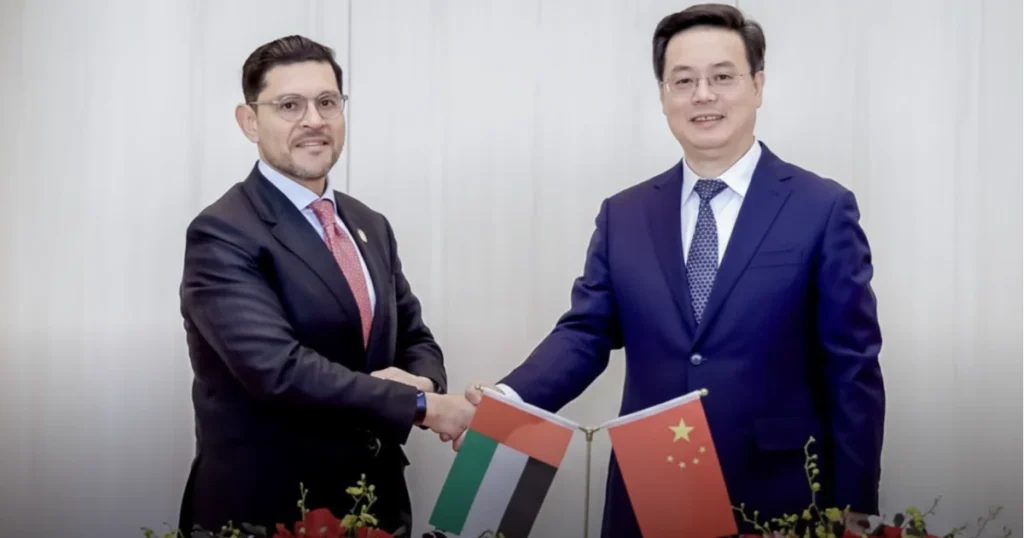
The new partnership with China and Shenzhen, at the World Governments Summit, is a giant step towards sustainable urban development that Dubai has made. The cooperation is aimed at the introduction of the internationally recognised model of the so-called sponge city, which is the strategy that is supposed to enable cities to become more efficient in water management, at the same time enhancing the resilience of the environment. This relocation indicates the wider outlook of Dubai to equip its urban agriculture for climate change and future population expansion. With the city still being a prime target in the world in terms of attracting investments, the Companies in Dubai will enjoy new opportunities that have been associated with green infrastructure, smart construction, and sustainable technologies.
Knowledge of the Sponge City Model
The sponge city concept was initially formulated in China to counter the damage of flooding, water shortage, and rapid urbanisation. Sponge cities are not merely dependent on the traditional drainage systems, but they are meant to absorb, store, and reuse the rainwater, with natural and semi-natural features. These consist of green areas, pervious roads, wetlands, water-sensitive city planning and underground storage facilities. This model removes the risk of flooding, enhances groundwater recharge, and creates a healthier city because it enables the city to work as a sponge.
Strategic Value of the Shenzhen Partnership
Shenzhen is generally known as a world pioneer in contemporary urban planning and smart city design. With the help of this collaboration, Dubai will be able to acquire the experience of Shenzhen in applying the principles of the sponge city at large scale. The agreement enables co-operation in the technical exchange of expertise and research on urban planning and sustainability. It also facilitates the vision of making Dubai a model city globally in terms of climate-resilience, excellent financial framework, and investment confidence of the finest banks in Dubai, which assist in financing the big infrastructure and innovation projects.
Alignment With Dubai’s Long-Term Urban Vision
The sponge city project aligns well with the Dubai 2040 Urban Master Plan that focuses on sustainability, living standards, and sustainable development. The city will achieve environmental impact reduction by incorporating water-sensitive designs in both new and renovated developments to enhance the space available to the people. It is also an effective method of providing efficient land use, enhancing transport planning and making areas more livable. The collaboration with Shenzhen enhances the capacity of Dubai to implement the global best practices and modify them to fit the local weather and geography.
Role of Knowledge, Research, and Education
In addition to infrastructure, the joint venture places a lot of emphasis on research, training, and capacity building. Exchange of knowledge among planners, engineers and policymakers of the two cities will assist in coming up with innovative solutions that will meet the needs of the region. It is believed that academic institutions will play a significant role in this process, where Universities in Dubai can play their part by taking part in research, urban studies programmes, and sustainability-oriented innovation. This relationship between education with real life development will assist in creating a skilled labour force that is in a position to sustain future city planning requirements.
Economic and Social Implications on the City
The choice to use the sponge city model is more than an environmental choice; it is an economic and social choice as well. The sustainable infrastructure may reduce maintenance costs in the long run, decrease the losses in case of extreme weather events, and enhance the health of people by increasing the green space and air quality. To the residents, this translates to secure neighbourhoods, enhanced recreational facilities, and a general sense of well-being. In the case of business, it provides a demand for new technologies, materials and professional services that are associated with sustainable development.
Global Collaboration at the World Governments Summit
The declaration made in the World Governments Summit demonstrates how Dubai is dedicated to global collaboration and progressive governance. Through collaboration with Shenzhen, Dubai is strengthening the city as a learning, innovative and collaborating city. The collaboration sends a strong message that future urban problems can be addressed through common understanding and international collaborations, and not through individual efforts.
Looking Ahead: Building a Resilient Dubai
Since Dubai is not that far in planning but transitioning to implementation, the emphasis is shifting towards making sponge city principles relevant to deserts and urban requirements on a local scale. The next phase of development is likely to be preconditioned by pilot projects, policy frameworks, and intelligent design solutions. Under success, the strategy of Dubai can be used by other cities with similar climate and growth difficulties as a reference point. Its collaboration with Shenzhen is not only an agreement but a long-term commitment to creating a stronger, sustainable, and futuristic city.
For more insights into urban development and business opportunities in the UAE, visit ever list