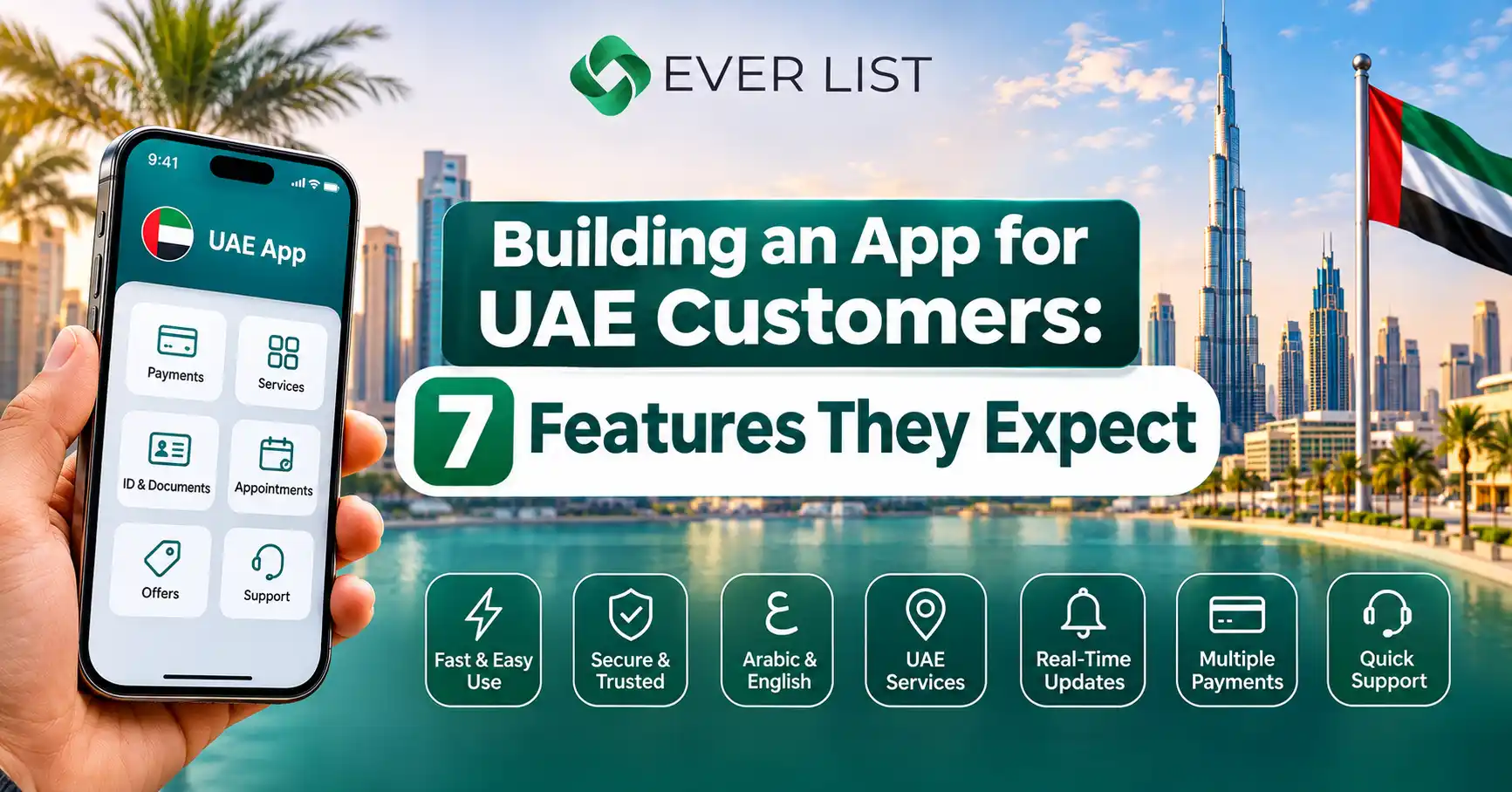
Building an App for UAE Customers: 7 Features They Expect

People in the UAE do a lot through their phones. UAE PASS, the national digital identity app, has more than 12 million registered users, according to Fast Company Middle East, and residents use it to sign in to government, banking and telecom services with one login. Habits formed there carry over to every other app on the phone.
So a customer who downloads your app compares it with the apps they already use every day. A mobile app development company in Dubai will raise most of the features below in its first workshop. Knowing them in advance helps you judge the answers and plan the budget.
1. Arabic and English, Both Done Properly
Arabic is the UAE’s official language, and English is the shared language of a population drawn from around the world. Customers expect to switch between the two from the first screen, so keep the language switch easy to find in the menu. Arabic needs more than translation: the layout runs right to left, menus and back buttons move to the other side, and dates, prices and numbers need one consistent format.
On a bilingual meal-planning app that AppVerticals built for a Dubai client, the weekly calendar, the grocery list and the calorie counts all had to read correctly in both languages. Screens with numbers and dates are where the extra testing goes.
2. Quick Sign-In
Long registration forms lose people. Offer sign-in with a mobile number and a one-time code, plus Apple and Google sign-in, and keep guest checkout for a first order. Apps that need a verified identity, such as finance, insurance or healthcare services, can add UAE PASS, so a customer confirms who they are in a few taps. Let people stay signed in on their own phone, and use Face ID or a fingerprint to reopen the app.
3. The Payment Methods People Use Here
Card payments are the base, and Apple Pay and Google Pay make them faster. Many UAE shoppers also like to split a purchase with pay-later services such as Tabby and Tamara, and some still prefer cash on delivery. Aani, the instant payment platform that Al Etihad Payments launched in October 2023, lets people send money with only a mobile number and pay merchants by QR code.
Any mobile app development company Dubai retailers work with should know which payment gateways support each method. Ask before the design starts, because every method you add changes the checkout screen. Show prices in dirhams with VAT included, so the total at checkout matches what the customer saw on the product page.
4. Addresses a Driver Can Find
Deliveries here run on building names, landmarks and map pins as much as street numbers. Let customers drop a pin, add a building and flat number and save the address as home or office. Dubai also has Makani numbers, an official code for each building entrance, which the app can accept for exact locations. Show delivery fees and time slots before checkout, and leave room for a note to the driver, such as a gate code or the right entrance.
5. Live Order and Booking Updates
People expect to see where things stand: order confirmed, out for delivery, driver two minutes away, appointment tomorrow at 4 pm. Build status screens and push notifications into the first version, and keep each message short and useful. Send them in the language the customer chose, and let people switch off promotions while keeping order alerts.
Timing matters too. Daily routines shift during the holy month, and Ramadan 2027 is expected to begin on February 8, so plan offers and reminders around iftar and the later evening hours.
6. Support on WhatsApp
Many UAE customers like to message a business before they call it, and a lot of that happens on WhatsApp. Add a chat button that opens WhatsApp or in-app chat, show your working hours and pass the order details into the conversation, so the customer doesn’t have to repeat them. Keep a phone number visible too, since some people still want to speak to a person.
7. Rewards That Bring People Back
Loyalty programs are everywhere in the UAE, from supermarkets to airlines, and customers look for points, cashback or member prices. A simple scheme works: points for each order, a reward that’s easy to reach and a clear balance on the home screen. Offers tied to seasons such as Ramadan, White Friday and back to school give people a reason to open the app again.
Choose the Features That Fit Your Business
Few businesses need all seven on day one. A clinic can start with bilingual booking, reminders, and WhatsApp support, while a shop needs payments, delivery addresses, and order tracking first. Platforms like Ever List can help businesses prioritize the features they need most and build a solution that fits their specific requirements.
Before the first design meeting, write down:
- The two or three things customers do with you each week
- The languages your customers speak
- How they pay you today
- How they contact you today
Build those well, and add the rest once the app has regular users.