A mosque carpet isn’t just flooring. It’s the surface where people kneel, bow, and pray, often five times a day, sometimes for years without ever being replaced. Get it right, and nobody really notices it, worshippers simply feel comfortable and the rows stay neat and orderly. Get it wrong, and it becomes a daily source of discomfort or disorganization in a space that’s meant to feel calm and dignified. If your mosque or prayer hall in Dubai needs new carpet, here’s what actually matters before you start.
Why Mosque Carpets Are Different From Regular Flooring
A living room carpet mostly needs to look good and survive foot traffic. A mosque carpet in Dubai has to do a lot more. It supports people kneeling and prostrating repeatedly through the day, which means it needs enough cushioning to be comfortable on the knees and forehead without feeling spongy or unstable. It also has to handle constant bare or socked feet, frequent vacuuming, and in many mosques, proximity to ablution areas where moisture is a regular concern. None of this is optional; it’s the actual job the carpet needs to do, and it’s why mosque carpet is really its own category rather than a variation on standard commercial flooring.
Getting the Prayer Lines Right
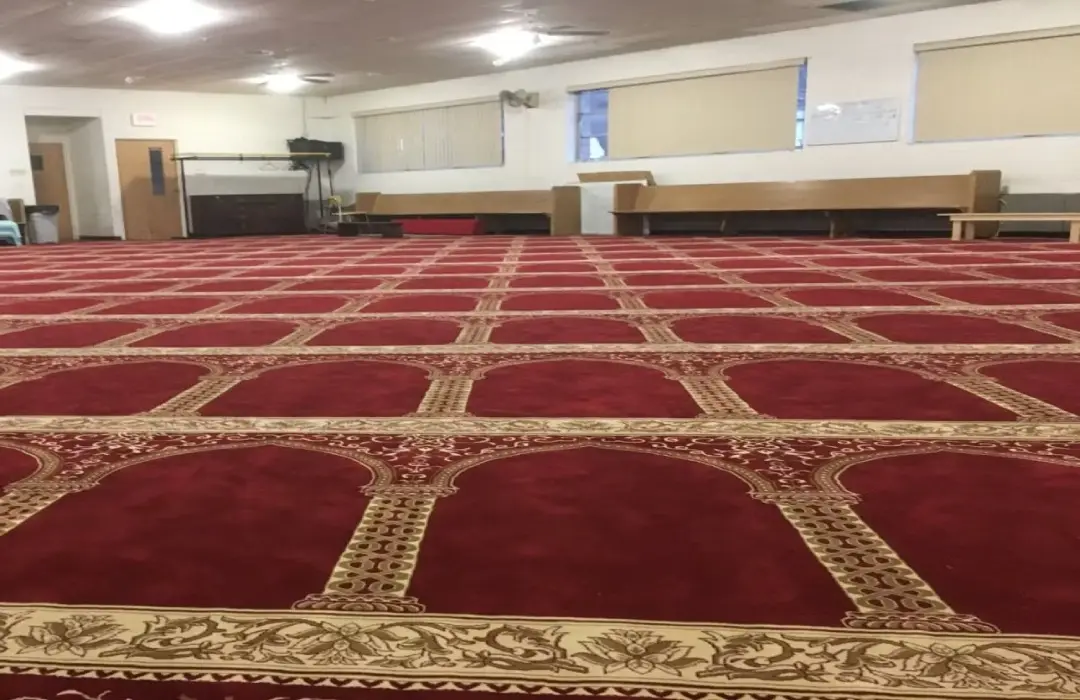
One of the most important, and most technical, parts of mosque carpet installation is the saff, the woven or printed lines that guide worshippers into straight, evenly spaced rows. These lines only work if they’re installed in precise alignment with the qibla, the direction every prayer is oriented toward. A good installer doesn’t estimate this. They confirm the exact qibla direction using proper tools before a single roll of carpet goes down, then align every seam and every line to match it exactly. If the lines are even slightly off, it throws off how the entire congregation lines up, which is exactly the kind of small error that becomes a daily frustration for a mosque committee.
Choosing the Right Material and Pile Height
Material choice usually comes down to a balance between comfort, durability, and budget. Wool carpets offer a soft, traditional feel and tend to be the choice for grand prayer halls and older, heritage-style mosques. Nylon and polypropylene blends are more budget-friendly, resist fading well, and hold up strongly under heavy daily use, making them a practical choice for busy community mosques. Pile height matters just as much as material. Smaller prayer rooms generally do well with a 6 to 8 millimeter pile, medium-sized mosques usually move up to 8 to 10 millimeters, and large prayer halls with heavy foot traffic often go for 10 to 14 millimeters for that extra cushioning during prostration. Anti-slip backing is worth insisting on too, particularly near entrances and ablution areas where floors can get damp.
Design Elements That Matter
Beyond function, the design of a mosque carpet shapes the whole feel of the space. Many mosques choose a mihrab-style pattern, a repeated motif echoing the prayer niche, which reinforces the sense of direction and order throughout the hall. Others prefer simpler geometric Islamic patterns with a clean border, which tend to suit more modern or minimalist mosque architecture. Color is usually chosen to match existing elements like the mihrab, minbar, or wall tiling, with deep greens, reds, and blues being common choices, sometimes finished with gold trim for a more traditional look. It’s worth remembering that a denser, well-made carpet also absorbs sound, which genuinely helps in large halls where a clean, calm acoustic environment matters during recitation and sermons.
The Installation Process
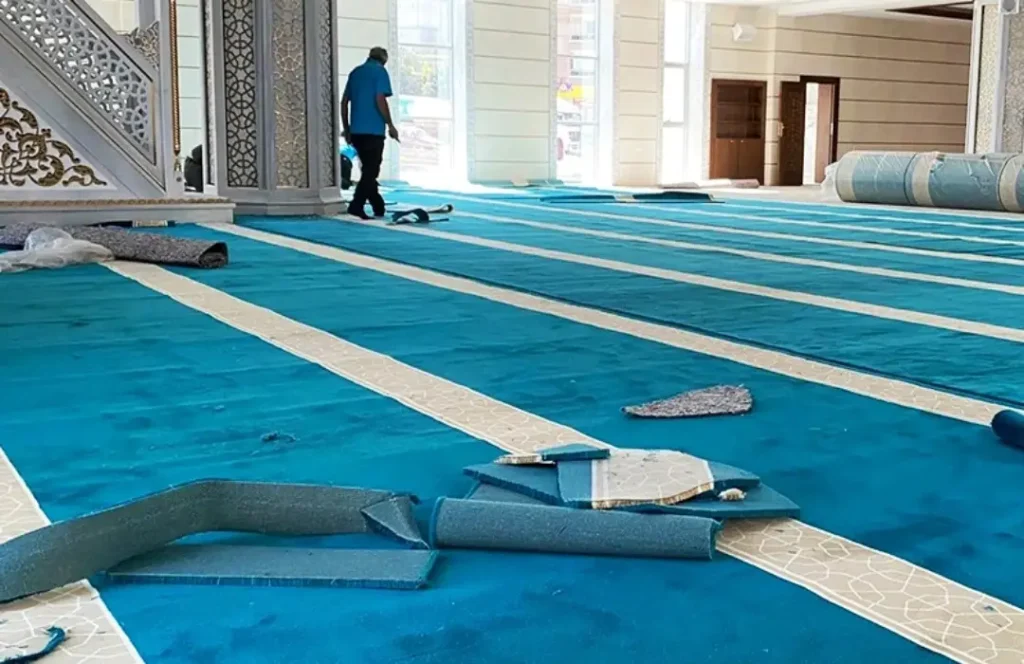
A proper installation starts with an on-site visit, since very few prayer halls are perfectly simple rectangles. Pillars, mihrab alcoves, and uneven hall shapes all need to be measured and accounted for before any carpet is cut. Most professional installers recommend wall-to-wall rolled carpet rather than separate loose rugs, since a continuous surface keeps the saff lines unbroken from one end of the hall to the other and removes the risk of rugs shifting or bunching underfoot, which is a genuine safety concern during prayer. The subfloor gets properly prepared, underlay is added for extra comfort and durability, and the carpet is then secured with adhesive to keep it stable for years of daily use. For a standard-sized mosque, this whole process usually takes one to three days, and most installers are used to working around prayer times so the space stays usable throughout.
Maintenance and How Long It Should Last
A well-made mosque carpet, properly installed, should realistically last somewhere between five and fifteen years, depending on foot traffic and how it’s cared for. Regular vacuuming is really the main upkeep it needs, since most quality mosque carpets are designed to resist staining and hold their color under constant use. That said, spills near entrances or ablution areas should be dealt with quickly, since trapped moisture is usually what shortens a carpet’s life faster than daily footsteps ever will. It’s also worth asking your installer about warranty coverage upfront, both on the material itself and on the installation work, so you know exactly what’s protected if an edge lifts or a seam starts to show wear a few years down the line.
Final Verdict
Carpets in Dubai installation isn’t something to hand to just any flooring contractor. It calls for real precision around qibla alignment, an honest understanding of what pile height and material will hold up under daily prostration, and a level of respect for the space that goes beyond a typical commercial job. When it’s done properly, the carpet becomes something worshippers never have to think about, it simply supports the prayer, keeps the rows straight, and holds up quietly for years. That’s really the mark of a good installation: nothing to notice, everything to feel.