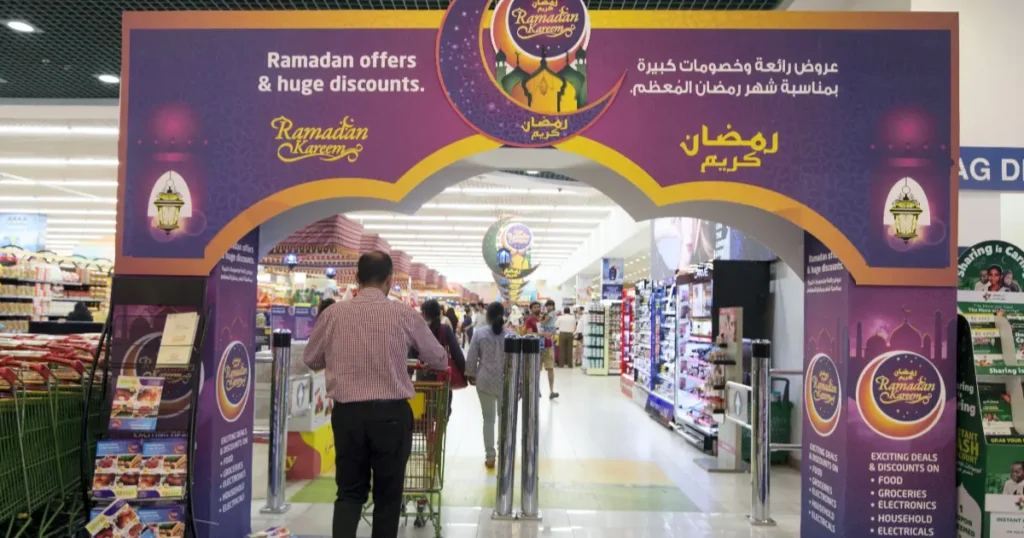
In preparation for Ramadan 2026, retailers in the UAE are taking timely and cautious measures to ensure food prices do not become unbearable for residents. Ramadan is a season of augmented food intake, family reunions, and community sharing, which in most cases results in augmented expenditure on food and meals. To finance households, retailers in the Emirates are strategically putting price controls, promotions, and improvement of supplies way ahead. Even regions with high hospitality activity, such as restaurants in Ras Al Khaimah, are on the move to meet demand by collaborating closely with suppliers to contain costs without compromising quality.
Early Planning and Bulk Purchasing Strategy
Early planning and buying in bulk are some of the primary methods through which the UAE retailers intend to maintain low costs of food in Ramadan 2026. The negotiations of suppliers in supermarkets and hypermarkets start several months before the Ramadan season to help them to secure their prices on basic commodities. Retailers minimize the effects of the world price changes by ordering rice and flour, cooking oil, dates, poultry, and frozen food in bulk. This would enable them to provide stable prices to the customers despite any uncertainty in the international markets. Retailers assume that early procurement is one of the best instruments that would cushion consumers during high seasons.
Target Discounts and Value Offers
The retailers are also increasing their 2026 Ramadan discount programs. Most supermarkets have decided to offer special Ramadan offers where thousands of food products will be offered at reduced prices. Such offers are usually buy-one-get-one, family value, and fixed-price offers targeting Iftar and Suhoor meals. As well as the kind of food staples, the stores will focus on festive food choices and fostering culinary diversity, offering shoppers an opportunity to access the best food in UAE at a reasonable price. The reason behind these campaigns is to offer a balance between the cheap and the diverse so that the families can have a taste of both the traditional and the modern dishes throughout the holy month.
Government Pricing Monitoring and Regulations
The regulations of the government remain significant in ensuring that the prices of Ramadan food are kept at a low level. The prices of basic food products are carefully checked by the UAE authorities, particularly at the time of religious holidays. Retailers are required to operate under accepted pricing patterns, and they cannot decide to charge more for essential staples without authorization. The digital monitoring systems are used to trace the changes in price in real time and maintain the transparency and safety of the consumers. The regulations will keep the market stable and avoid unwarranted price rises that will provide assurance to the shopper as they get ready to take part in Ramadan.
Support for Families and Community Needs
Retailers are also mindful of the demands of families, students, and institutions, which require consistent food prices. Especially, food suppliers are liaising with organisations like Schools in Abu Dhabi to make meal programs and catering services affordable throughout Ramadan. This specialization expresses a more comprehensive social responsibility since the issue of affordable food affects not only families but also schools and societies. Retailers believe that this is part of their contribution to the overall society during the holy month.
Online Grocery Shopping Growth
Online grocery stores are slowly gaining relevance in Ramadan shopping in the UAE. Retailers will also provide unique online discounts, expedited delivery services, and preassembled Ramadan grocery packs in 2026. Such services make customers use less time and spend less on impulse purchases that usually come in expensive packages. Price comparison to other retailers online also promotes competition among retailers, which contributes to low prices. Internet usage is also becoming a major component of the overall pricing strategy, as many consumers are now willing to plan their Ramadan shopping online.
Reducing Food Waste and Improving Efficiency
The other significant measure is to cut down food waste and enhance the efficiency of the supply chain. The retailers are also making investments in superior inventory management systems to prevent overstocking and spoilage. Safe food that has not been sold is usually donated to charities and community kitchens. The retailers will be able to regulate operational costs by enhancing efficiency, minimizing losses, and transferring savings to the customers. This is a strategy that helps to sustain and consume it at a low cost during Ramadan.
A Balanced Ramadan in 2026 for the Shoppers
On the whole, UAE retailers believe that their joint efforts will allow maintaining the food prices balance in the course of Ramadan 2026. This is achieved through early buying, good relations with suppliers, government regulation, online growth, and the community. These initiatives are an indication of the desire of the UAE to be economically stable and socially healthy throughout significant cultural and religious seasons.
For more details, visit the everlist.ae